
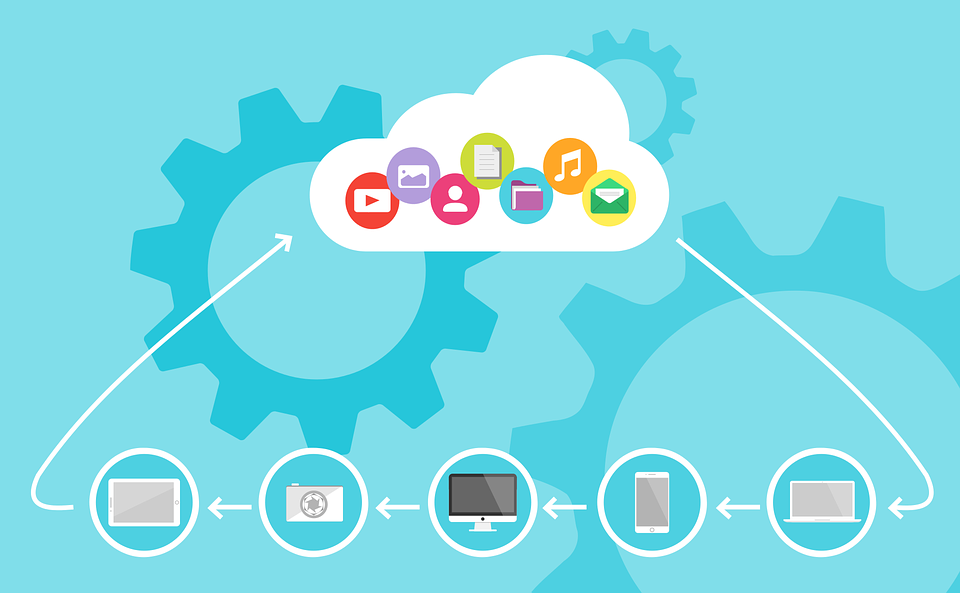
Supercomputers are capable of wonderful things. They drive the internet by storing billions of webpages and files, and they also use incredible processing power to keep the internet running. They are also capable of solving individual equations much more quickly than a desktop computer. Supercomputers are also very robust and are designed to operate continually, with only portions of their capacity going down for maintenance at a time.
Increasingly, that power is being devoted to cloud computing. It is already common to store personal and business files on remote servers. This is a logical extension of local networks sharing resources with a mainframe. It is also possible to send difficult tasks to supercomputers to solve, with some people even playing graphically intensive games in web browsers using other people’s computing power. Discover for yourself the benefits of cloud computing.
Understanding Cloud Services
By far, the most common form of cloud computing is just taking advantage of storage services. In the past, gigabytes on supercomputers were fairly expensive, but the available capacity has greatly increased in the past decade and continues to grow. Some major email services offer several gigabytes of file storage for free and offer more with the purchase of a service plan.
For even bigger jobs, dedicated sites exist where businesses can store and retrieve massive files at rapid bit rates. These services can be included in a collaborative workspace package, but the best services are provided by dedicated backup servers who use their processing power to upload and download large system files quickly. These services have download options that are designed to make retrieving system backups easy.
Business Services and Computing Rental
In traditional networks, several monitors might share the processing power, and hard drive of a network computer called a mainframe. With recent technology, this concept can be deployed over vast distances using the internet to provide a great variety of infrastructural solutions. A computing provider might run the software and then project that onto office computers or might simply be handed monster calculations to which the results are delivered to a local computer.
One way to visualize the process is to imagine a graphical artist who creates elaborate three-dimensional models and then attempts to build a game or a movie scene using computer graphics. Even the most powerful desktop computer might not be able to handle the number of processes, but cloud computing allows complex scenes to be offloaded to a supercomputer. Modern creative genius is possible because of outsourcing services.
Models of Cloud Computing
Cloud computing is divided into several different business models, including Infrastructure as a service and platform as a service. This means that a distant supercomputer can partially replace expensive hardware that an office would otherwise have to employ, or else it can run applications over the internet and then deliver them to the screen as easily as watching a video in a web browser.
The potential is amazing, and the prices are surprisingly low. A terabyte of storage might go for as little as $20, and collaborative business solutions might be offered for a similar price. Using an internet service to replace security hardware might be a little more expensive, but it might be cheaper than having a dedicated network closet and paying an onsite technician.

